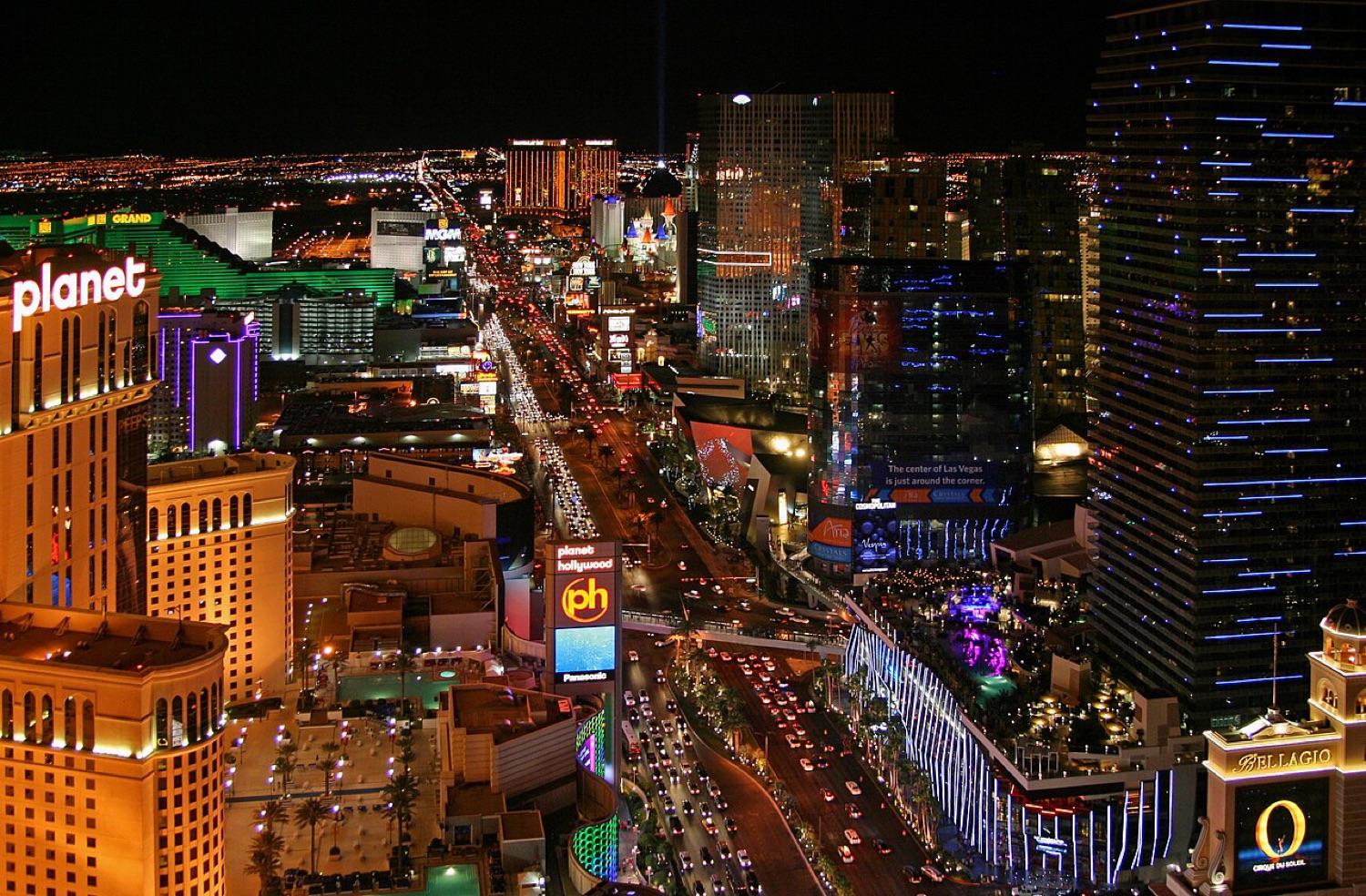
Las Vegas is the only city in the world where the biggest theatres are owned by casinos. For more than seventy years the resorts of the Strip have used shows to bring visitors through their doors, and in the process built a theatre economy unlike anything in London or New York.
Lounges, showrooms and the Rat Pack
In the 1950s every major casino had a showroom and a lounge. Headliners played the showroom for dinner and late shows; lounge acts kept the bars busy into the small hours, close enough to the tables that the music drifted across the gaming floor. The most famous engagement of the era came in early 1960, when Frank Sinatra, Dean Martin, Sammy Davis Jr and friends shared the stage of the Sands' Copa Room while filming Ocean's 11 in town. Nobody pretended the shows were the main business: they were there to make people stay, eat, drink and play.
Feathers and showgirls: the production show
Alongside the headliners grew the production show, a spectacular revue with a line of showgirls, elaborate costumes and variety acts. The Stardust imported the Lido de Paris in 1958, and the Tropicana opened its own Folies Bergère on Christmas Eve 1959. It ran until March 2009, close to fifty years, and is often described as the longest-running show in the city's history. Donn Arden's Jubilee! opened at what is now Bally's in 1981 and ran for 34 years until February 2016, by then the last of the classic feathers-and-rhinestones revues.
Smaller revues filled the mid-sized rooms. The programme biographies of two members of the Hot Flush! creative team include work on a Las Vegas revue called Covergirls, a reminder of how many British musical directors, designers and technicians have passed through the showrooms of the Strip.
Residencies: from Elvis to Celine
The modern residency began with Elvis Presley, who opened at the new International Hotel in July 1969 and returned season after season through the 1970s. The template was simple: one star, one room, a long run, and a casino full of fans before and after every show. It was revived spectacularly in 2003, when Celine Dion opened A New Day in the purpose-built Colosseum at Caesars Palace, and a long line of pop stars has followed.
| Show | Venue | Years |
|---|---|---|
| Folies Bergère | Tropicana | 1959–2009 |
| Jubilee! | Bally's | 1981–2016 |
| Mystère (Cirque du Soleil) | Treasure Island | from 1993 |
| O (Cirque du Soleil) | Bellagio | from 1998 |
| A New Day (Celine Dion) | Caesars Palace | 2003–2007 |
| Mamma Mia! | Mandalay Bay | 2003–2009 |
| The Phantom of the Opera | The Venetian | 2006–2012 |
| Menopause The Musical | Las Vegas Hilton, Luxor, Harrah's | resident for many years |
Broadway on the Strip, and a menopause musical
The 2000s brought Broadway to Las Vegas. Mamma Mia! opened at Mandalay Bay in February 2003 and ran for almost six years, and The Phantom of the Opera had a specially built theatre at the Venetian. Some full-length Broadway transfers struggled, and producers learnt that Vegas audiences preferred shows of around ninety minutes that let them get back to the tables, the bars or the next attraction.
No show proved that better than Menopause The Musical. After several years in the Shimmer Cabaret at the Las Vegas Hilton, it moved to the Luxor in 2009 and later to Harrah's, and its producers now bill it as the longest-running musical in Las Vegas history. A compact comedy about four women at a lingerie sale has outlasted many lavish spectaculars, which says a lot about what a casino actually wants from a show.
Why casinos pay for theatre
The economics are simple. Every casino game carries a house edge, a small built-in advantage that turns millions of individual bets into predictable income. A show that keeps a thousand visitors on the property for an evening, before dinner and after the curtain, is worth more to the resort than its ticket sales alone. That is why Las Vegas can sustain resident productions for decades while British shows have to pay their way on tour, a contrast we explore in how a touring production works.
Britain never developed a Strip of its own. The plan for a Las Vegas-style regional "supercasino" in the late 2000s was won by Manchester rather than the favourite, Blackpool, and was then scrapped altogether, a story told in our history of Blackpool's variety theatres and gaming. The closest London has to a Vegas showroom is the theatre inside the Hippodrome Casino.